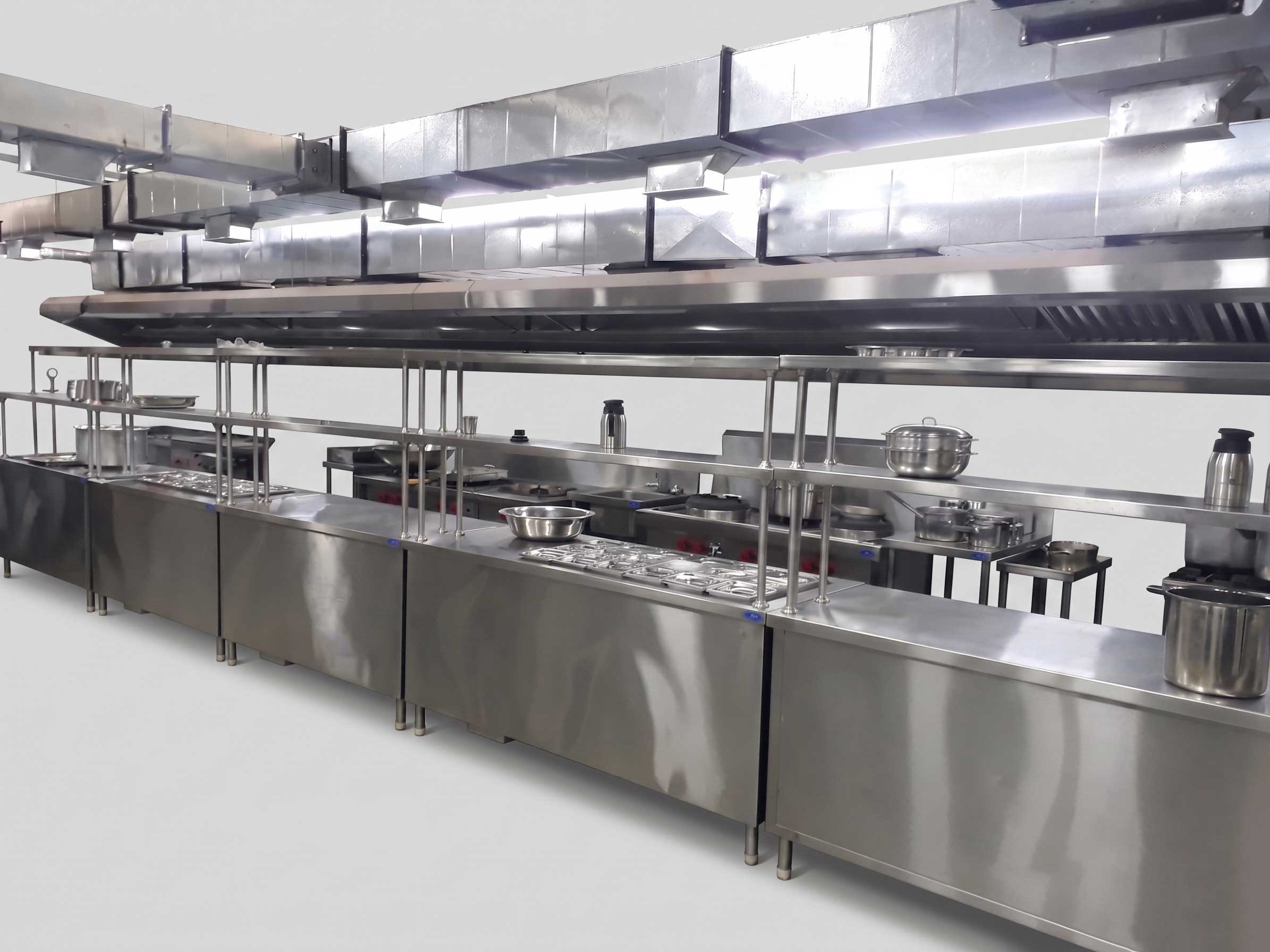
At Sri Venkateshwara Air System in Bangalore, Karnataka, our fabrication services form a crucial part of our comprehensive offerings. We possess the expertise and infrastructure to transform raw steel materials into precisely engineered components and structures, catering to diverse industrial and commercial needs. We specialize in both stainless steel fabrication and mild steel fabrication, leveraging the unique properties of each material to deliver tailored solutions.
Metal Fabrication Services
Types of Stainless Steel Fabrication (Based on Processes)
Cutting
- Laser cutting: High precision and intricate cuts with minimal heat-affected zone.
- Plasma cutting: Efficient for cutting thicker sheets and complex shapes.
- Waterjet cutting: Versatile for various thicknesses and materials, with no heat distortion.
- Shearing: Straight cuts on thinner sheets using mechanical force.
- Sawing: Mechanical cutting for bars, tubes, and profiles.
Forming
- Bending (press brake): Creating angled bends and complex profiles using specialized machinery.
- Rolling: Forming cylindrical or curved shapes by passing material through rollers.
- Stamping: Using dies to create specific shapes or patterns in sheet metal.
- Deep drawing: Forming cup-like or complex hollow shapes from sheet metal.
- Spinning: Shaping metal discs into symmetrical forms by rotating them against a tool.
Joining
- Welding (TIG, MIG, stick, spot): Fusing two or more pieces of stainless steel together using heat and pressure, with different methods suited for varying thicknesses and applications.
- Brazing and soldering: Joining materials using a filler metal with a lower melting point than the base material.
- Fastening (bolting, riveting, screwing): Mechanical joining methods for specific applications.
Machining
CNC milling, turning, and drilling — precision removal of material to create complex geometries and achieve tight tolerances.
Finishing
- Polishing (mirror, brushed, satin): Enhancing the surface appearance and removing imperfections.
- Passivation: Chemical treatment to enhance corrosion resistance by removing surface contaminants and promoting the formation of the passive layer.
- Electropolishing: Electrochemical process for a smooth, bright, and corrosion-resistant finish.
- Powder coating and painting: Applying protective and aesthetic coatings.
Types of Mild Steel Fabrication (Based on Processes and Applications)
- Structural steel fabrication: Creating frameworks for buildings, bridges, and other infrastructure using sections like I-beams, channels, and angles.
- Sheet metal fabrication: Working with thin sheets to produce enclosures, panels, brackets, and other components through cutting, bending, and joining.
- Plate fabrication: Fabricating thicker components for machinery, tanks, and heavy equipment.
- Pipe and tube fabrication: Bending, cutting, and welding pipes and tubes for fluid transport and structural applications.
- Welded assemblies: Joining multiple mild steel parts through various welding techniques to create complex structures or components.
- Machined components: Shaping mild steel blocks or bars into precise parts using machining processes like milling, turning, and drilling.
- Forging: Shaping heated mild steel using compressive forces to create strong and durable parts.
- Casting: Pouring molten mild steel into molds to create complex shapes.
Share sketches, GA drawings, or samples — we will return a fabrication plan, timeline, and commercial terms.