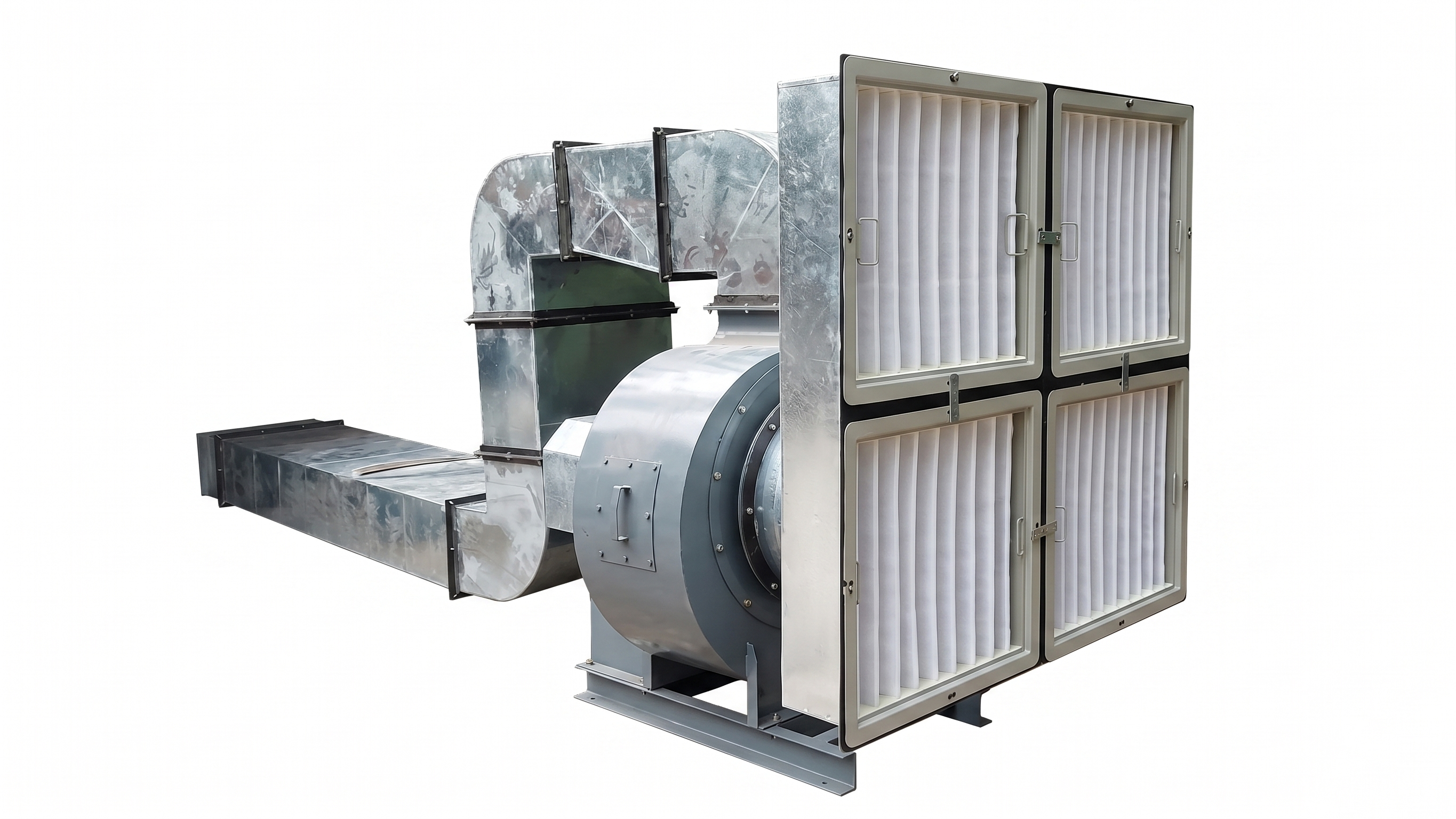
The fabrication of fresh air systems can result in various configurations depending on the specific application and requirements. We fabricate fresh air handling assemblies and distribution networks for offices, hospitals, hotels, and industrial facilities.
Types of Fresh Air Systems
Here are some common types:
Basic Fresh Air Intake Systems
Description: The simplest form, involving ductwork fabricated to draw outdoor air into the building, often with a filter to remove large particles. This air is then typically mixed with recirculated air by the main HVAC system.
Fabrication focus: Primarily involves ductwork (GI, aluminum, or sometimes specialized materials), intake louvers, bird screens, and filter housings.
Dedicated Outdoor Air Systems (DOAS)
Description: Systems designed to handle 100% outdoor air, conditioning it (heating, cooling, dehumidifying) before supplying it to the occupied spaces. Exhaust air is handled separately.
Fabrication focus: More complex, involving insulated ductwork, air handling units (fabricated or assembled), dampers, coils, condensate drainage systems, and sophisticated control panels.
Heat Recovery Ventilation (HRV) Systems
Description: Fabricated with a heat exchanger that transfers heat between the incoming fresh air and the outgoing exhaust air. This pre-heats incoming air in winter and pre-cools it in summer, significantly improving energy efficiency.
Fabrication focus: Includes insulated ductwork for both supply and exhaust air streams, a heat recovery core housing (often fabricated), condensate drainage, and balancing dampers.
Energy Recovery Ventilation (ERV) Systems
Description: Similar to HRV but also transfers moisture between the air streams. This can be beneficial in both humid and dry climates to manage humidity levels indoors and further enhance energy efficiency.
Fabrication focus: Similar to HRV but with an energy recovery core housing designed for moisture transfer, along with insulated ductwork and balancing dampers.
Specialized Filtration Systems with Fresh Air Intake
Description: Systems designed to bring in fresh air and pass it through advanced filtration stages (e.g., HEPA filters, activated carbon filters) to remove specific contaminants before it enters the building.
Fabrication focus: Includes ductwork, housings for specialized filter banks (often custom-fabricated), and potentially pre-filters and post-filters.
Key Features of Our Fresh Air Systems
Improved Indoor Air Quality (IAQ): The primary benefit is the introduction of fresh, oxygen-rich outdoor air, which dilutes and removes indoor pollutants such as carbon dioxide, volatile organic compounds (VOCs), allergens, and odors.
Enhanced Occupant Comfort and Well-being: Adequate fresh air supply contributes to a more comfortable and productive indoor environment, reducing fatigue, headaches, and other symptoms associated with poor air quality.
Compliance with Building Codes and Standards: Many building codes and ventilation standards mandate minimum fresh air intake rates to ensure healthy and safe indoor environments.
Customized Solutions: Fabricated systems can be precisely designed and built to match the specific ventilation requirements of a building, taking into account its size, occupancy, layout, and activities.
Integration with Existing HVAC Systems: Fresh air systems can be seamlessly integrated with existing heating, ventilation, and air conditioning (HVAC) systems to provide a comprehensive climate control solution.
Energy Efficiency Potential: When designed with energy recovery components (like heat recovery ventilators or energy recovery ventilators), fresh air systems can pre-condition incoming air using exhaust air, reducing heating and cooling loads and saving energy.
Control Over Air Quality: Fabricated systems can incorporate various filtration stages to remove particulate matter, allergens, and other contaminants from the incoming fresh air.
Durable and Long-Lasting: Utilizing quality materials and expert fabrication techniques ensures the longevity and reliable performance of the fresh air system.
Adaptability to Specific Needs: Systems can be designed to address unique challenges, such as high humidity, specific pollutant concerns, or the requirements of specialized environments (e.g., cleanrooms, laboratories).
Whether you are refreshing an older AHU room or adding dedicated outdoor air to a new wing, we can quote fabrication and installation together. Contact us to discuss design-assist from consultant drawings or site survey, shop drawings, and balancing-friendly layouts.