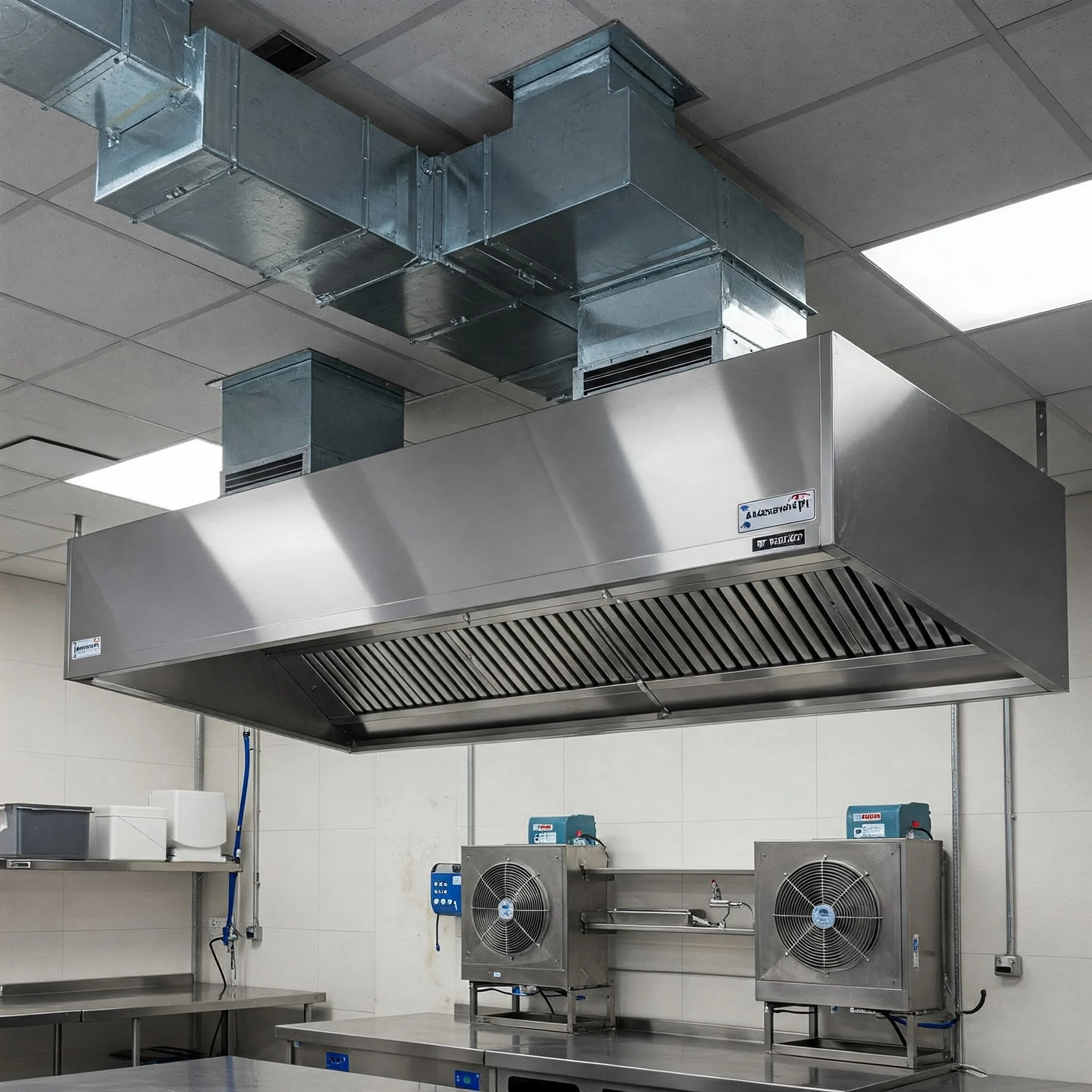
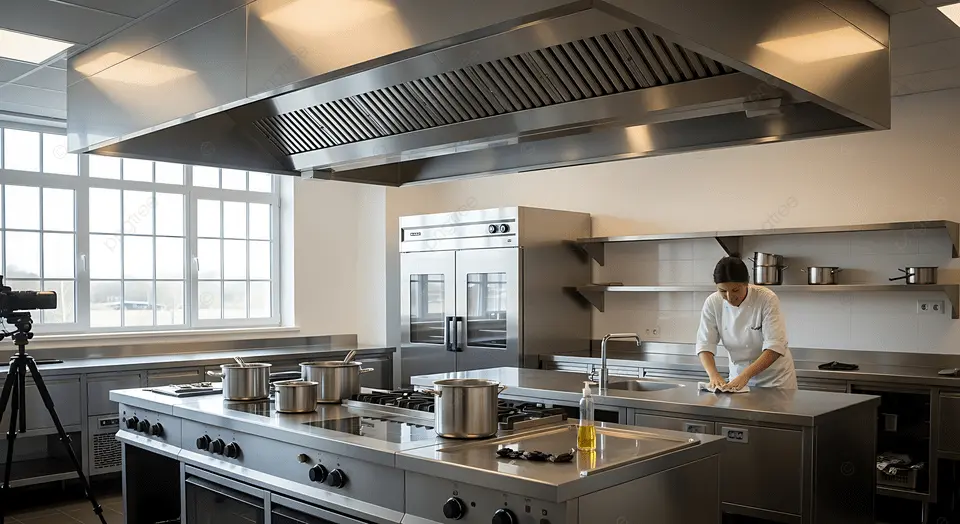
Kitchen hood & kitchen air exhaust systems
Effective exhaust is your first line of defence against grease, smoke, and heat buildup — keeping air clear, surfaces cleaner, and operations compliant.
Types of kitchen exhaust systems
Kitchen exhaust systems can be categorized based on their design, mounting style, and airflow management.
Wall-mounted hoods
Description: Installed directly against a wall above cooking appliances. These are common in both residential and smaller commercial kitchens.
Variations: Can be flat, angled, or curved in design.
Island hoods
Description: Suspended from the ceiling above kitchen islands with cooking surfaces. These are designed to be aesthetically pleasing from all sides.
Downdraft ventilation
Description: Integrated into the cooktop or installed behind it, these systems pull smoke and fumes downwards rather than upwards. Less common in high-demand commercial kitchens due to lower efficiency in capturing rising heat and smoke.
Commercial kitchen hoods (heavy-duty)
Canopy hoods: The most common type, covering the entire cooking surface.
Proximity hoods (eyebrow hoods): Installed closer to specific cooking equipment like fryers or grills for more direct capture.
Short-circuit hoods (supply & exhaust): Integrate a supply air plenum to deliver fresh air directly into the hood’s capture area, improving efficiency and reducing overall exhaust volume.
Condensate hoods: Designed to capture and remove steam and condensation, often used above dishwashers or steam-intensive cooking equipment.
Residential kitchen hoods
Description: Designed for home kitchens, often prioritizing aesthetics and quieter operation while still providing effective ventilation.
Variations: Include under-cabinet hoods, chimney hoods, integrated hoods, and microwave hoods with built-in ventilation.
Key features of kitchen exhaust systems
- Effective removal of pollutants: Efficiently captures and extracts grease, smoke, steam, and cooking odors, preventing them from spreading throughout the building.
- Improved indoor air quality: Creates a healthier kitchen environment by removing airborne contaminants that can be harmful to respiratory health.
- Enhanced safety: Reduces the risk of fire hazards associated with grease buildup in ductwork and on surfaces. It also helps remove combustion byproducts from gas cooking appliances.
- Increased comfort: Lowers kitchen temperatures and humidity levels, making the cooking environment more comfortable for staff and occupants.
- Protection of kitchen surfaces and equipment: Prevents grease and moisture from settling on walls, ceilings, and equipment, making cleaning easier and prolonging their lifespan.
- Compliance with health and safety regulations: Many commercial kitchens are legally required to have effective exhaust systems to meet health and safety standards.
- Odor control: Prevents cooking odors from permeating adjacent areas, which is particularly important in restaurants, hotels, and open-plan living spaces.
- Improved visibility: By removing smoke and steam, the hood enhances visibility in the cooking area, contributing to a safer and more efficient workflow.
- Customizable design: Kitchen hoods can be fabricated in various sizes, shapes, and materials (often stainless steel) to match the specific layout and aesthetic requirements of the kitchen.
At Sri Venkateshwara Air System in Bangalore, we understand the critical importance of a well-designed and fabricated kitchen exhaust system. We offer customized solutions, expert installation, and durable products to ensure a clean, safe, and efficient kitchen environment for your business or home. Contact us today to discuss your specific needs.
We fabricate wall canopies, island hoods, and custom shapes in SS grades suited to food service environments. Hoods are coordinated with your cooking line — griddles, woks, fryers, and tandoors — so capture velocity and overhang dimensions meet practical kitchen operations, not just drawings.
Inclusions we often supply
- Grease filters, drip trays, and access for cleaning
- Make-up air plenum coordination where applicable
- Transitions to GI or SS risers and roof curb details
- Integration with kitchen exhaust blowers and fire suppression cutouts
Send your kitchen layout or invite us for a site measure — we will propose hood sizes, CFM targets, and a bill of material for approval.